
The PSTD Advantage: How Certification and Volunteering Propelled My Career in Just 3 Years
by Kevin Ross D. Nera

A Series of Fortunate Accidents
In early 2023, I was an aspiring trainer and consulting transitioning from eight (8) years of government service. My toolkit was functional but niche: Microsoft Excel, Completed Staff Work, and Strategic Performance Management System (SPMS).
At the time, the "revenue side" of a balance sheet was a mystery to me.
My exposure to HR and Learning & Development (L&D) was shaped by economic recession and a global pandemic. Webinars and e-learning were dominant, and Gen AI was still in its early stages. I knew that to be credible, I had to upskill. I invested my own funds into PSTD’s Certified Training Facilitator Course, where I met my first mentors in PSTD, April Salonga and Edwin Ebreo.
Shortly after, I began facilitating workshops for Positive Workplaces (PW) under John Baluyot, who was a past PSTD President. In a full-circle moment, I passed my certification by running a problem-solving workshop for PW—a design that has since become a staple of my portfolio. John was also instrumental in introducing me to a wide range of people in PSTD, some of whom would eventually become good friends and constant collaborators. These serendipitous interactions weren't just networking; they were the foundation of my career in Management Consulting and Facilitation.
From Volunteer to Leadership
Growth rarely happens in a vacuum. After attending a few Tipanans (General Membership Meetings), I volunteered for the Junior PSTD Committee. Under Edwin’s mentorship, I became Committee Chair within my first year.
We spent months pitching to colleges and universities to bridge the gap between academia and industry. That "boots on the ground" experience forced me out of my comfort zone and made me comfortable talking to new people and initiating partnerships. By the 2023 National Convention in Boracay, my inspiration and desire to serve peaked after learning how crucial Talent Development was in nation-building.
Before the year ended, I was offered the role of Chief People Officer at PW and with nothing to lose, decided to run for the PSTD Board which I fortunately became part of. Today, in 2026, I serve as the Co-Chair of the 51st National Convention.
The Three Pillars of the PSTD Advantage
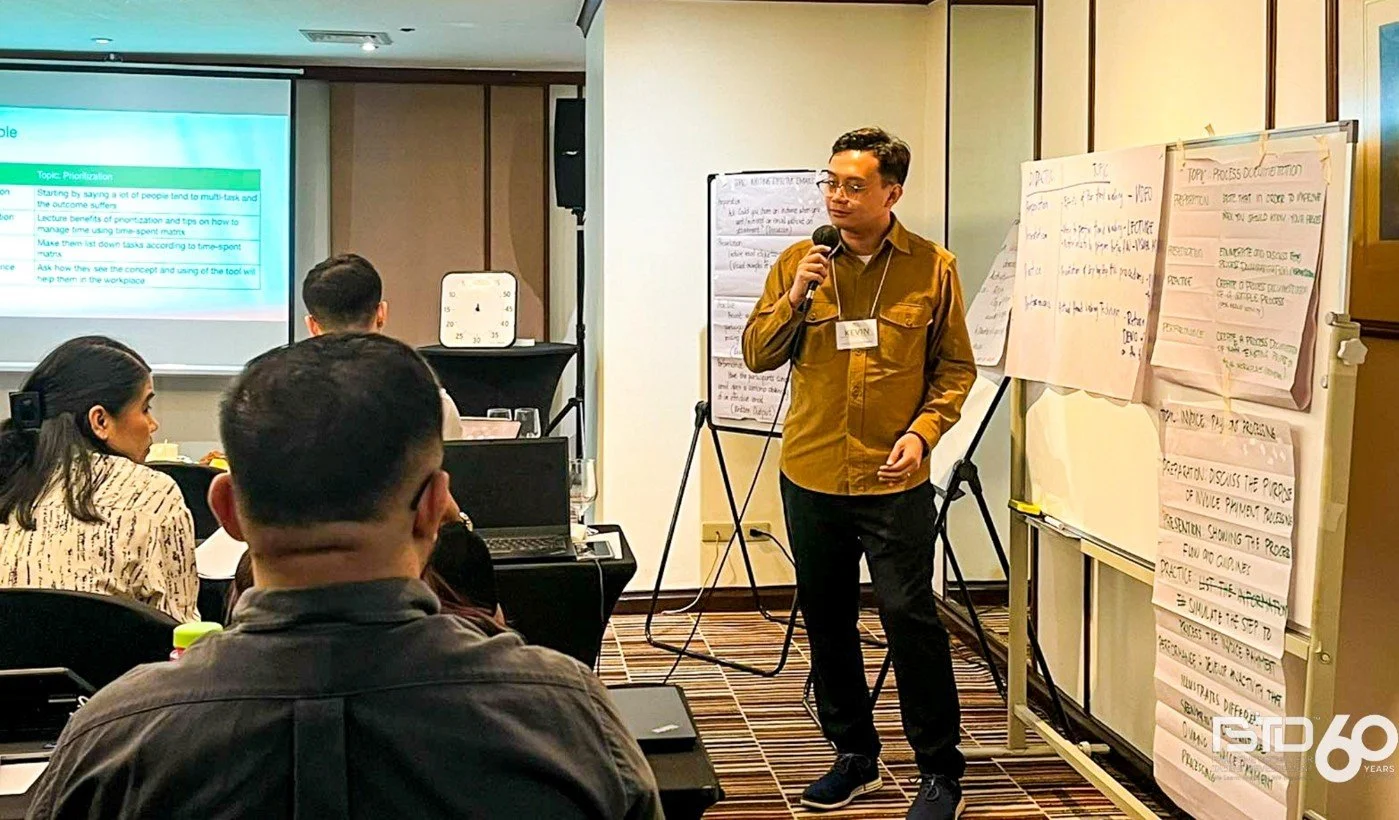
1. The Professional Differentiator: From "Friend Rates" to Global Scale
Before certification, my facilitation was limited to a small circle of friends at a modest daily rate. Post-certification and after several quarters of shadowing and receiving feedback post-facilitation, my confidence and competence soared:
Revenue Growth: My daily rate has grown 5x to 10x.
Portfolio Expansion: I moved from 3 technical courses to over 20 programs covering leadership, communications, and wellbeing, in addition to my bread and butter technical programs.
Global Reach: I transitioned from training government staffers to advising entrepreneurs. Just this year, I conducted my first international workshop where I learned that the foundational facilitation principles I learned also applies despite cultural differences.
2. The Consulting Edge: Moving Beyond Order-Taking
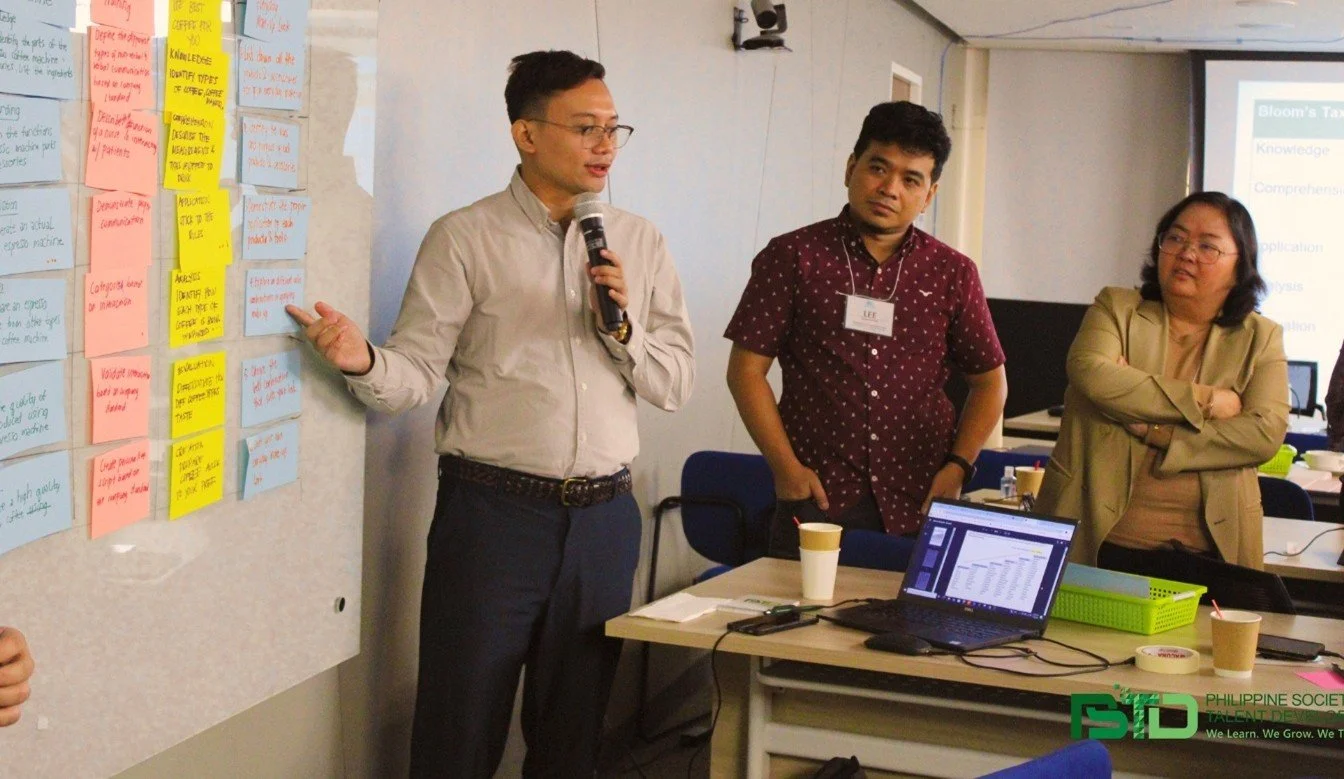
PSTD shifted my mindset from trainer to talent developer. When talking to clients, I stopped treating trainings as the default solution. Instead, every client conversation begins with a deep needs analysis. We only move to a workshop if we agree that the performance gap is a learning need. And depending on the needs analysis, we customize the design to meet the specific learning objective.
The frameworks and tools I gathered through PSTD expanded my consultant and trainer toolkit, allowing me to recommend interventions at the organizational, team, and/or individual level.
3. The Leadership Masterclass: Managing Without Titles
As Edwin often said, volunteerism is the ultimate test of leadership. Because you cannot rely on traditional rewards and punishments, effectively leading in PSTD requires mastering the art of social influence. Leading other more credentialed leaders - many of whom head their own organizations - taught me how to communicate a vision and manage complex stakeholder interests.
Serving on the Board was essentially a "Crash Course MBA," exposing me to governance, finance, and digital scaling. This experience was formative for my role as our company transitions from startup to scale-up.
The Power of Reciprocity
For any aspiring talent developer, PSTD opens a lot of doors as my experience has proven. However, finding these doors require devoting time and effort by volunteering in the different committees and playing an active role in their initiatives.
Likewise, gaining the knowledge and skills required to strengthen your personal value proposition - whether as a trainer, a consultant, or an employee - requires investing resources to become certified and/or attend the Tipanans and National Convention. The great thing about it is that all these engagements are great in terms of value-for-money if you are intentional in getting your desired outcome.
As one of my mentors often says: "What you get depends on what you’re willing to give." In the world of Talent Development, PSTD remains the gift that keeps on giving.
